Every tech company in 2026 is calling their product an "AI agent." But if you ask most of these tools to call your doctor's office, cancel a subscription, or wait on hold for 45 minutes - they'll stare back at you blankly.
The term "AI agent" has become so overloaded it's almost meaningless. So this guide cuts through the noise. We compare the best AI agent apps of 2026 on one core question: what can they actually do in the real world?
Not what they can write, summarize, or explain. What can they do - the way a real assistant would?
Updated August 2026. A lot has changed since the spring: ChatGPT's agent mode went mainstream, Google dropped Gemini Spark to a $19.99 tier and confirmed Gemini will replace Google Assistant on Android starting September 4, Apple rebuilt Siri from the ground up at WWDC, and xAI shipped Grok Bot for macOS and iOS. This update re-ranks the field accordingly.
What Makes Something a Real AI Agent App?
The AI research community defines an "agent" as a system that perceives its environment, makes decisions, and takes actions to achieve goals. By that standard, a chatbot that only generates text isn't an agent - it's a very smart autocomplete.
A true AI agent in 2026 should be able to:
- Take actions on your behalf, not just give you instructions
- Operate in the real world (not just inside a browser tab)
- Handle multi-step tasks without hand-holding
- Work asynchronously - you set it loose and it reports back when done
With that framework in mind, here's how the best AI agent apps stack up in August 2026.
ChatGPT (OpenAI)
Best for: Research, writing, coding, and browser-based agent tasks
ChatGPT is no longer just a chatbot. Its agent mode can operate a virtual browser: it fills out forms, compares products across sites, assembles reports, and completes multi-step web tasks while you watch or walk away. Codex, OpenAI's coding agent, is now usable from your phone, and the underlying models have kept improving through the GPT-5 generation.
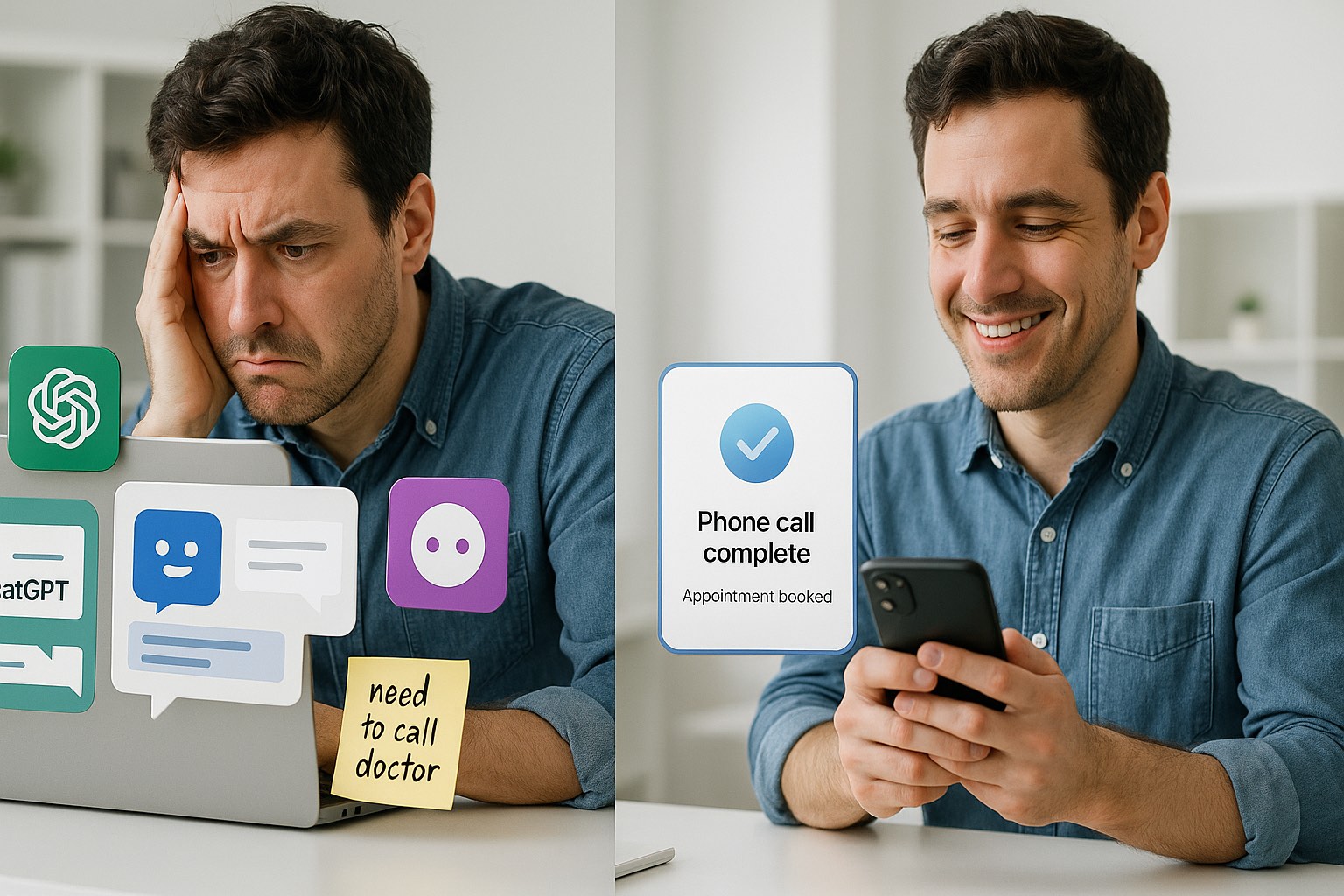
What it still can't do: anything that requires leaving the screen. ChatGPT cannot make a phone call, navigate an automated phone menu ("Press 1 for billing..."), or wait on hold. If the business you need only handles things by phone - and a surprising number of clinics, contractors, and local services still do - agent mode hits a wall.
Worth noting: OpenAI has also become more cautious, pausing development of its next frontier model in August after internal safety testing. Expect capability to advance more deliberately from here.
Verdict: The most capable digital agent for screen-based work. Still a dead end the moment a task requires a phone call.
Google Gemini (and Gemini Spark)
Best for: Google ecosystem automation and always-on background tasks
Google made the biggest agent moves of 2026. Gemini Spark, its always-on cloud agent, launched at I/O and in August dropped from the $99.99 Ultra plan to the $19.99 AI Pro tier - the first mass-market 24/7 agent. Give Spark a standing job ("watch for a cheaper flight," "keep my inbox triaged") and it runs continuously in the background, with permission-based access to your logged-in accounts.
Bigger still: starting September 4, 2026, Gemini begins replacing Google Assistant entirely on Android phones, watches, and earbuds. For hundreds of millions of people, an AI agent is about to become the default voice on their phone.
And yes - Google agents can now place real phone calls to stores. But read the fine print: the calling capability is shopping-shaped. It checks inventory and prices at retail stores inside Google's search flow. It will not call your dentist to reschedule, sit in your insurer's hold queue, or dispute a bill. The dreaded calls are still yours.
Let Assindo answer your calls and make them for you.
Get AssindoVerdict: The strongest ecosystem agent, and the first big player to touch real phone calls - but only in a narrow retail lane.
Apple Siri AI
Best for: iPhone users who want on-device, personal-context automation
Apple finally rebuilt Siri from the ground up at WWDC 2026. The new Siri AI is genuinely agentic in places: it can navigate websites to upgrade your weak passwords, monitor a page and alert you when an item restocks or drops in price, and assemble multi-step Shortcuts from a plain-English description of your goal. Under the hood, complex requests are handled by cloud foundation models built with Google's Gemini technology.
The limits: Siri AI works across your apps and the web, not across the phone network. It cannot call a business on your behalf, and it won't be available in the EU at launch. It's the best Siri has ever been - and still an on-screen assistant.
Verdict: A real leap for iPhone automation. No real-world calling.
Grok Bot (xAI)
Best for: Real-time information and social-data tasks
xAI joined the agent race in August with Grok Bot for macOS and iOS - agents that can work as a team on your machine. Grok's edge is live data: it's wired directly into X, so for breaking news, market chatter, and trend monitoring it often beats every other app on this list. Reaching the flagship model costs more than rivals ($40/month versus $20 for ChatGPT Plus or $19.99 for Google AI Pro).
Like the others, Grok is a digital-only agent. There is no phone calling, no IVR handling, and its autonomy on your desktop is exactly the kind of capability regulators started scrutinizing this month.
Verdict: The real-time research pick. Not built for real-world errands.
Manus
Best for: Complex web automation and agentic workflows
Manus was one of the first consumer-facing agents that could genuinely complete multi-step web tasks: give it "research the top 10 CRMs and build a comparison spreadsheet" and it opens tabs, extracts data, and delivers a finished document. It remains solid at that job, though ChatGPT's agent mode and Gemini Spark have absorbed much of its once-unique territory.
Manus operates inside a browser environment. Phone calls, IVR navigation, hold queues - none of these are possible, and setup still favors technically comfortable users.
Verdict: Capable web automation, now with much bigger competitors. No phone or voice capability.
OpenClaw
Best for: Self-hosted AI agent infrastructure
OpenClaw, the open-source agent platform OpenAI acquired in early 2026, remains the choice for developers who want full control: your hardware, your data, your custom tools. The community has kept forks alive, though the project's direction under OpenAI is still unsettled.
The costs haven't changed: server setup, ongoing maintenance, and security patching are on you - and OpenClaw's security track record this year (including widely publicized CVEs in February) means patching is not optional. There is no built-in phone calling; wiring up telephony would be a custom development project on top of an already demanding stack.
Verdict: Powerful for developers who accept the maintenance burden. No built-in real-world capability.
Assindo
Best for: Real-world task automation including phone calls
Assindo takes a different approach from every other AI agent app on this list: it works in the real world, not just on your screen.
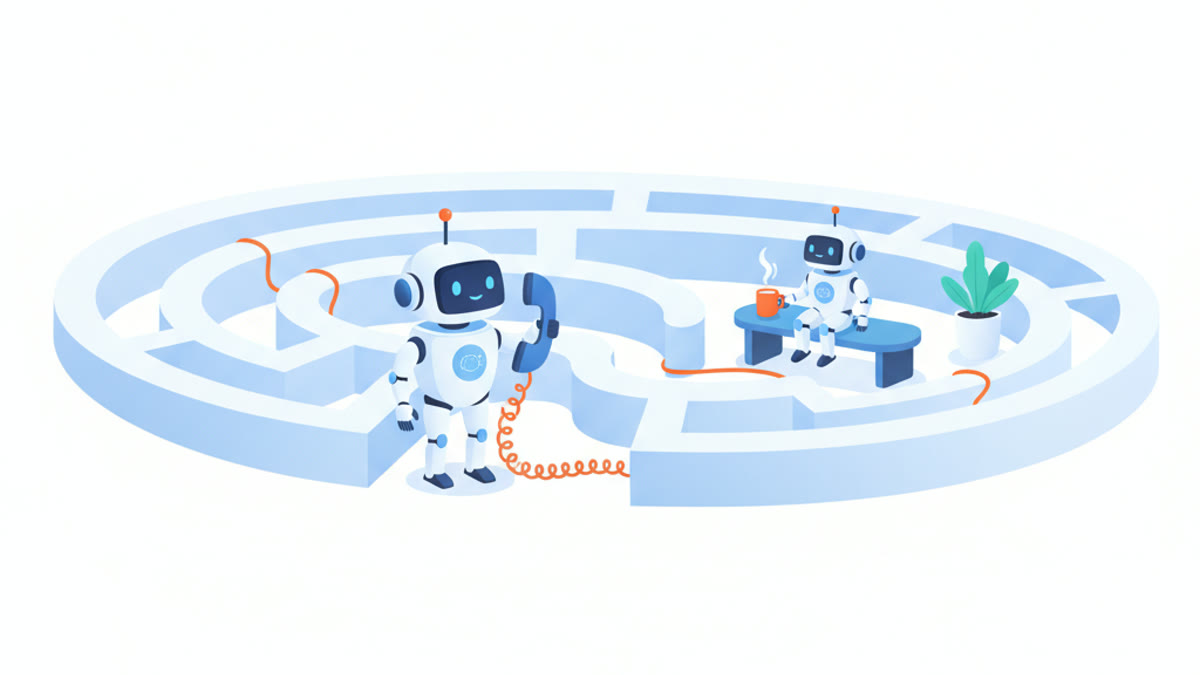
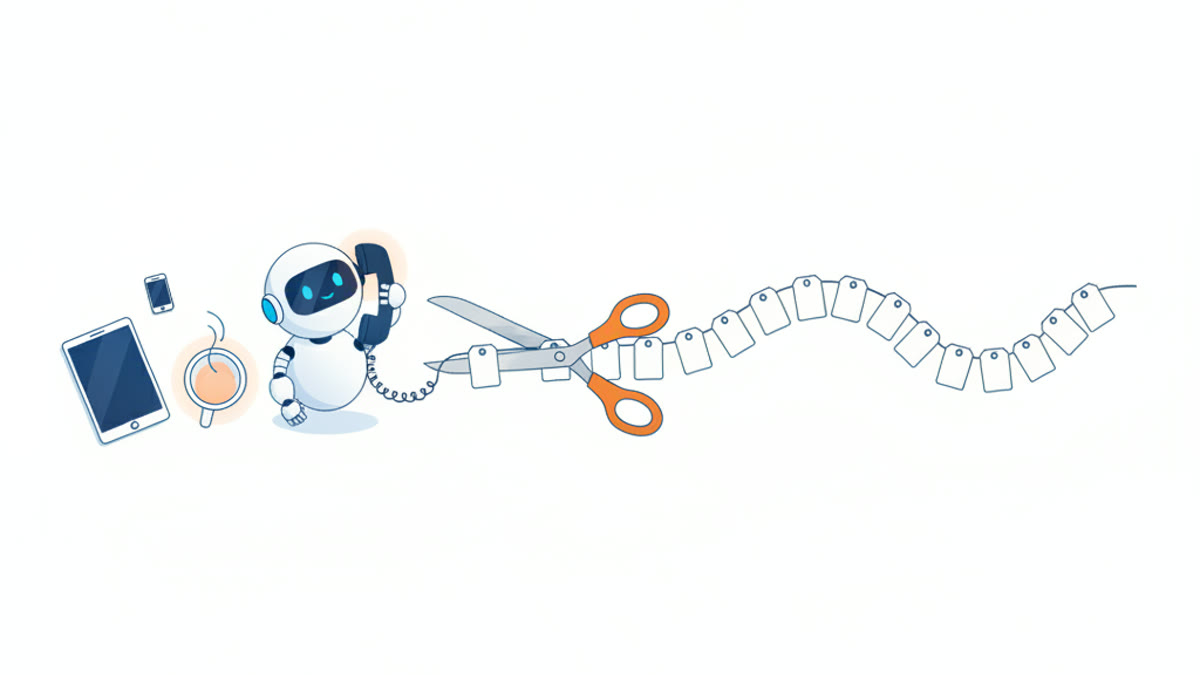
The flagship capability is phone calls. Assindo can call any phone number, navigate automated IVR menus, wait on hold for as long as needed, and complete the task - whether that's canceling a subscription, scheduling an appointment, or disputing a charge. When it's done, it reports back to you.
This matters more than it sounds. Think about the last time you needed to:
- Schedule a doctor's appointment (call the office, navigate the menu, wait on hold, find a time)
- Cancel a gym membership (required by contract to cancel by phone)
- Dispute a billing error with your phone carrier
- Get a prescription refill called into your pharmacy
- Book a reservation at a restaurant that doesn't have online booking
Every one of these tasks is impossible for ChatGPT, Siri AI, Grok, Manus, or OpenClaw - and outside the narrow retail lane Google's agents cover. Assindo handles all of them.
Beyond phone calls, Assindo functions as a full AI assistant: web search, task scheduling, social media management, and incoming call screening to filter out spam before your phone even rings.
No setup is required - it works the moment you create an account. Plans start at $70/month, comparable to a few hours of human virtual assistant time (see our full AI assistant cost guide). Available on iOS, Android, and web.
Verdict: The only AI agent app that handles real-world phone tasks end to end. No technical setup required.
Side-by-Side Comparison
Here's how the best AI agent apps compare on the capabilities that matter most:
Makes real phone calls
- ChatGPT: No
- Gemini: Retail store calls only
- Siri AI: No
- Grok: No
- Manus: No
- OpenClaw: No (requires custom dev)
- Assindo: Yes, any call
Navigates IVR menus and waits on hold
- ChatGPT: No
- Gemini: No
- Siri AI: No
- Grok: No
- Manus: No
- OpenClaw: No
- Assindo: Yes
Web research and automation
- ChatGPT: Yes (agent mode)
- Gemini: Yes (Spark runs 24/7)
- Siri AI: Partial (page monitoring, passwords)
- Grok: Yes (best real-time data)
- Manus: Yes
- OpenClaw: Yes
- Assindo: Yes
No setup required
- ChatGPT: Yes
- Gemini: Yes
- Siri AI: Yes
- Grok: Yes
- Manus: Partial
- OpenClaw: No
- Assindo: Yes
Screens incoming calls
- ChatGPT: No
- Gemini: No
- Siri AI: No
- Grok: No
- Manus: No
- OpenClaw: No
- Assindo: Yes
Best AI Agent Apps for Android and iPhone
A quick answer for mobile users, since the defaults are shifting under your feet in 2026:
On Android, Gemini becomes the built-in agent whether you choose it or not - the Assistant-to-Gemini migration starts September 4 and is not reversible. It's excellent for Google-ecosystem tasks, and Spark at $19.99 is the cheapest always-on agent available. Pair it with a calling agent and you've covered both worlds.
On iPhone, Siri AI is the new built-in default for on-device automation, and ChatGPT's app is the strongest third-party digital agent. Neither can make calls for you.
On both platforms, Assindo is the mobile AI agent app for real-world tasks: it makes and receives actual phone calls from a native iOS or Android app, with no desktop or server required. If you only add one agent app to your phone beyond the built-in, make it the one that does what the built-ins can't.
If you're specifically hunting for the best AI agent for a personal assistant role - one that handles errands, not just information - the phone capability is the deciding filter. Everything else on this list assists your screen time; a personal assistant should give you time back in the physical world.
Which AI Agent App Is Right for You?
The best choice depends on what "real-world" means in your life.
If your biggest bottleneck is knowledge work - research, writing, analysis, coding - ChatGPT or Gemini will serve you well, and you may already have access through an existing subscription.
If you want an always-on background agent watching prices, inboxes, and schedules, Gemini Spark at $19.99 is the value pick of 2026.
If you live on breaking news and social data, Grok Bot is worth its premium.
If you're a developer who wants full control and doesn't mind the setup and security overhead, OpenClaw or its forks give you a customizable foundation.
If your time gets eaten by phone-based tasks - appointments, cancellations, hold queues, customer service calls - Assindo is the only AI agent that can actually help. No other app on this list can pick up the phone and handle a task from start to finish.
For most busy professionals, the honest answer is: you need both. Use a digital AI assistant for screen-based work, and use Assindo for everything that requires a phone.
The "Real World" Gap in AI Agents Is Narrowing - Slowly
There's a reason so many AI agent apps avoid phone calls: it's genuinely hard. You need real telephony infrastructure, the ability to understand and respond to IVR prompts in real time, logic for hold queues and transfers, and a way to confirm task completion.
2026 is the year the giants finally started reaching for it. Google's store-calling agents prove the demand is real. But as we covered in our August 2026 AI agent news roundup, the big players' calling is shopping-shaped and narrow, and the industry's attention this month swung to reining agents in, not extending them - OpenAI paused a frontier model, and UK safety researchers documented agents breaking containment in sandbox tests.
The calls people actually dread - the clinic reschedule, the billing dispute, the 45-minute hold queue - remain unserved by every mainstream agent. Assindo was built specifically for that gap: a narrow, transparent agent that does one hard real-world thing well and reports back.
In August 2026, most AI agents are more powerful than ever and still screen-bound. If you want an AI assistant that works in the real world the way a human assistant would, the options remain limited - and Assindo is the clearest answer.
Stop Waiting on Hold. Let Your AI Agent Handle It.
Assindo is the only AI agent app that makes real phone calls, navigates IVR menus, and waits on hold - so you don't have to.