You spend 13 hours every year on hold. Over a lifetime, that adds up to 43 days, more than a month, just waiting for someone to pick up. And that is before you factor in the time spent pressing buttons through endless phone menus, repeating your account number to three different departments, and explaining your issue from scratch each time you get transferred. What if there were an AI that makes phone calls for you, one that could handle the waiting, the navigating, and the talking while you get on with your life?
That is no longer a futuristic fantasy. In 2026, AI phone agents are here, and they are changing how people deal with the most tedious part of modern life: being on the phone when you would rather be doing literally anything else.
Quick Answer: Can AI Really Wait on Hold for You?
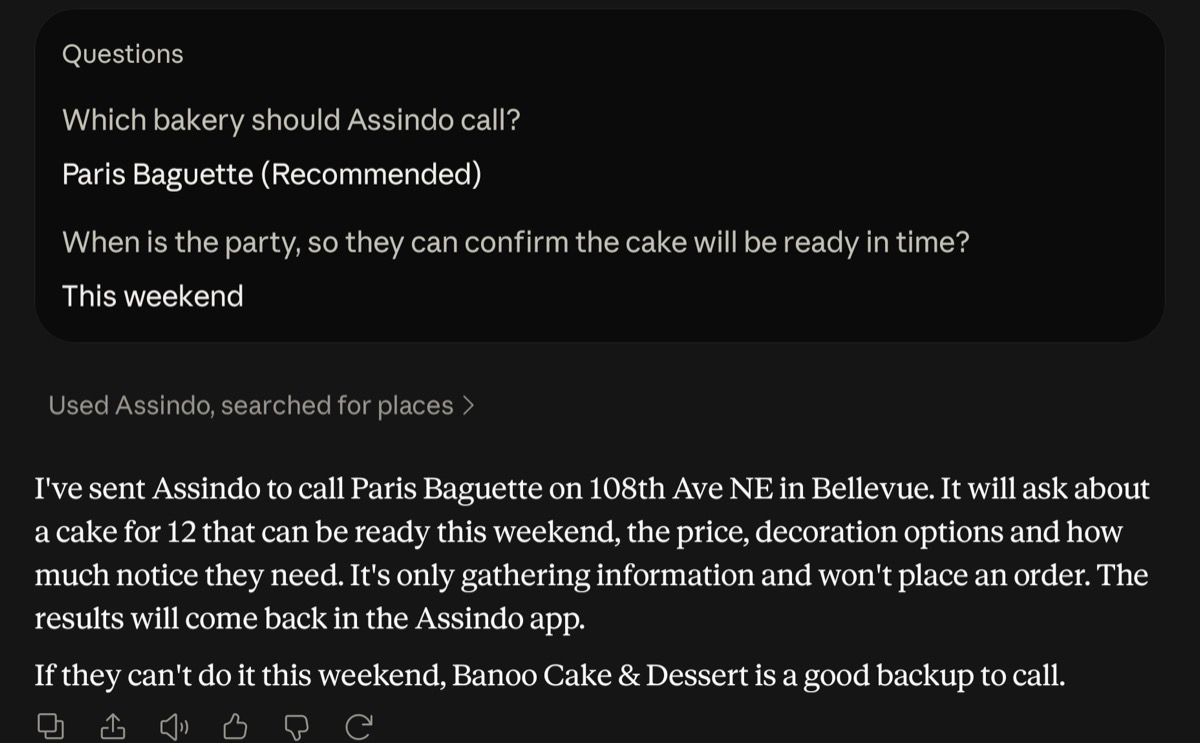
Yes. In 2026 a phone-calling AI assistant can do the whole call for you:
- Dials and waits in the hold queue for as long as it takes, so your phone stays free.
- Presses through the phone menu ("press 2 for billing") and answers the robot's questions.
- Talks to the human who finally picks up, using the goal you gave it in plain language.
- Reports back with a written summary and the full transcript, so you know exactly what was said.
- Costs a few dollars a month at the personal tier, far less than the time it returns.
The honest limit: it cannot pass identity checks that need your voice or a code only you can see, and it will not pretend to be you - a good one says it is an AI assistant calling on your behalf.
Why Phone Calls Still Dominate (Even Though Nobody Likes Them)
Despite the rise of apps, chatbots, and online portals, a surprising number of essential tasks still require a phone call. Try canceling certain subscriptions online and you will hit a wall designed to funnel you to a phone line. Need to dispute a charge on your insurance bill? That is a call. Scheduling a specialist medical appointment, asking about a prescription, or resolving a billing error with your utility company? All calls.
Government agencies are even worse. The IRS, DMV, Social Security Administration, and local courts still operate primarily by phone. In many cases, there is no online alternative at all.
Here is the uncomfortable truth: businesses know that phone calls create friction. Many companies deliberately make cancellation and dispute processes phone-only because they know most people will give up rather than wait on hold for 40 minutes. Roughly 60% of callers hang up if hold times exceed two minutes. Companies count on that.
So you are stuck in a system designed to waste your time. The phone menu asks you to "press 1 for billing, press 2 for technical support, press 3 for..." and by the time you reach a human, you have already spent 15 minutes you will never get back.
Why Can't My AI Assistant Make Phone Calls?
This is the question a lot of people ask after trying ChatGPT, Gemini, or Siri: if AI is so advanced, why can't my AI assistant just make the call for me? You can ask it to draft an email, summarize a document, or plan a trip, but the moment you say "call the dentist and book me an appointment," it politely explains that it cannot actually place phone calls.
The reason is architectural. Digital-only AI assistants live entirely inside a text box. They generate words, but they have no connection to the telephone network, no ability to dial a number, listen to a live human, press buttons in a voice menu, or sit through hold music. They are brilliant at thinking and useless at doing, at least when the task lives in the real world instead of on a screen.
Making a real phone call requires a different kind of system, one that bridges the AI's reasoning with actual telephony. That means voice synthesis to speak, speech recognition to hear, the ability to send the tones that navigate an IVR menu, and the patience to wait on hold indefinitely. Most AI assistants were never built to touch the phone network at all, which is exactly why they cannot speak to a business on your behalf.
Let Assindo sit on hold and navigate phone menus for you.
Get AssindoThe good news is that a new category of AI agent was built specifically to close that gap. Instead of stopping at "here is a script you could read," it dials the number itself and handles the whole conversation. That single capability, making a real outbound call, is what separates a true AI phone agent from a chatbot that can only talk about phone calls.
How AI That Makes Phone Calls Actually Works
AI phone agents combine several technologies that have matured rapidly in the past two years. Here is what happens under the hood when an AI assistant places a call on your behalf:
Voice recognition and synthesis. The AI uses natural-sounding speech to communicate, not the robotic monotone of old automated systems. Modern voice AI sounds conversational enough that most people on the other end do not realize they are talking to a machine.
Large language model reasoning. When connected to a human representative, the AI does not follow a rigid script. It understands context, responds to unexpected questions, and adapts its approach based on the conversation. If a customer service rep asks "Can you verify the last four digits of the account holder's number?" the AI knows how to respond appropriately, using only information you have pre-authorized.
IVR navigation. This is the part that saves the most sanity. The AI listens to phone menu options, identifies the correct path, and presses the right buttons instantly. No more listening to eight options when you already know you need billing. The AI can navigate multi-level IVR trees in seconds, something that might take a human caller several minutes.
Hold management. When the AI gets placed on hold, it simply waits. It does not get frustrated, does not hang up, and does not lose patience after 20 minutes of elevator music. When a human finally picks up, the AI is ready to go. Meanwhile, you have been doing something productive.
Summary and reporting. After the call, you get a clear summary: what was discussed, what was resolved, and what follow-up is needed. No more trying to remember what the representative said or scrambling to write down a confirmation number.
Real-World Scenarios: When an AI Phone Agent Saves the Day
The true value of AI that makes phone calls becomes clear when you look at specific situations people deal with regularly.
Disputing a billing error
You notice a $47 charge on your electric bill that does not look right. Normally, you would need to call the utility company, wait on hold for 10-20 minutes, explain the issue, potentially get transferred to a supervisor, and spend another 15 minutes going back and forth. Total time: 30-45 minutes.
With an AI phone agent, you tell it: "Call Pacific Gas and Electric, dispute the $47 charge on my February bill, reference account number ending in 4521." The AI handles the entire process, the hold time, the IVR menu, the conversation with the representative, and reports back with the resolution. Your time spent: about 30 seconds.
Scheduling a medical appointment
Finding an available slot with a specialist often means calling the office during business hours (when you are also working), navigating their phone system, and then playing calendar Tetris with the receptionist. An AI agent can call the office, check available times against your calendar, and book the appointment that works best for you.
Canceling a subscription
We have all been there. You want to cancel a gym membership or streaming service, and the company makes you call a "retention specialist" whose entire job is to keep you from leaving. The AI does not get talked into staying. It politely but firmly communicates your cancellation request, handles the retention pitch, and confirms the cancellation. No guilt trips, no "but we can offer you 50% off for three months."
Getting a refund from an airline
Flight got canceled? Good luck with the online form. AI phone agents can call the airline, navigate the multi-level IVR system (press 1 for English, press 3 for existing reservations, press 2 for cancellations), wait through the inevitable hold time, and sort out the refund or rebooking on your behalf.
Calling government offices
The IRS average hold time regularly exceeds 30 minutes. The DMV is not much better. An AI phone agent treats these calls the same as any other: it dials, waits, navigates the menu, and handles the conversation. The difference is you do not have to block out an hour of your morning.
AI Phone Assistants vs. Human Virtual Assistants
You might be wondering how AI that makes phone calls compares to hiring a human virtual assistant.
Human VA services like Fancy Hands, Belay, and Time Etc have offered phone call assistance for years. They are effective, but they come with significant limitations:
Cost. Human virtual assistants typically charge $25-60 per hour. Even budget services like Fancy Hands start around $18 for a handful of requests. If you need three phone calls handled per week, you are looking at $200-400+ per month for a human VA. An AI phone assistant runs on a flat monthly subscription, a small fraction of that cost.
Availability. Human VAs work business hours and need scheduling. An AI agent is available 24/7. Need to call a business that opens at 8 AM sharp to grab the first available appointment? Schedule the AI to call at 8:00:01 AM.
Consistency. Human VAs vary in quality and attention to detail. An AI agent follows your instructions precisely every time and provides a documented record of every interaction.
Speed. A human VA might batch your request with other clients' tasks. An AI agent starts your call immediately.
Where human VAs still win is in situations requiring genuine empathy, complex negotiation, or legal sensitivity. If you are dealing with a contentious insurance claim or a sensitive family matter, a human touch matters. But for the vast majority of routine phone calls, billing questions, appointment scheduling, cancellations, and information gathering, an AI agent handles them just as well at a fraction of the cost.
What to Look for in an AI That Makes Phone Calls
Not all AI phone assistants are created equal. If you are evaluating options, here is what matters:
Can it navigate IVR menus? Many AI assistants can only handle text-based tasks. True AI phone agents need to listen to phone menu options and respond with the correct inputs. This is a non-negotiable feature.
Does it wait on hold for you? Some services will dial the number but disconnect after a few minutes of hold time. A good AI phone agent waits as long as necessary, whether that is 5 minutes or 50.
Can it converse with a human representative? Dialing and navigating menus is only half the battle. The AI needs to actually speak with the person who answers and handle the conversation intelligently.
Does it work with any phone number? Some AI calling tools only work with specific businesses or APIs. Look for a general-purpose agent that can call any phone number, just like you would.
Is it easy to use? If you need to self-host software, configure APIs, or write scripts to make a phone call, it is not practical for everyday use. The best AI phone assistants work through a simple app: you tell it what to do, and it does it.
Assindo checks all of these boxes. It is an AI agent that makes real phone calls on your behalf, navigates IVR menus automatically, waits on hold for as long as it takes, and converses naturally with whoever picks up. It also screens your incoming calls and can handle web search, scheduling, and other tasks. It runs on iOS, Android, and web, with no technical setup required.
The Future: Phone Calls You Never Have to Make
The AI phone agent market is projected to reach $10 billion by 2032, and for good reason. As voice AI continues to improve, with better emotional intelligence, multilingual support, and deeper integration with personal calendars and accounts, the number of phone calls you will need to make personally will shrink dramatically.
We are already seeing the early signs in 2026. Three in five U.S. small and mid-sized businesses plan to use a hybrid model with AI call agents by the end of the year. A growing share of routine order-status and support calls are already answered by AI on the business side. Insurance companies are beginning to accept AI-initiated calls, and healthcare systems are adapting to AI scheduling.
But you do not have to wait for the world to catch up. The technology to reclaim those 13 hours a year exists right now. Every call you delegate to an AI agent is time you get back: time for work, family, hobbies, or simply not listening to hold music.
The 43 days of hold time in your future do not have to happen.
Stop Wasting Hours on Hold, Let AI Make the Call
Assindo is an AI agent that makes real phone calls for you. It navigates IVR menus, waits on hold, and talks to real people, so you do not have to.