A hospital bill arrives for an amount you cannot pay this month. The letter says "call our billing office to discuss options," and the billing office opens at 8am, has a 40-minute queue and a phone menu with no option that says "I need a payment plan." So the bill sits on the counter, and the next letter is less polite. If you have wondered whether AI can negotiate a payment plan for you, the honest 2026 answer is: partly yes, and the part it can do is the part most people dread, which is the phone call itself.
Here is the twist most people miss. The other side of that call is already using AI. Collection agencies and billing departments now deploy voice agents that offer payment plans on live calls, with a rules engine deciding which terms are allowed. Consumers are only just getting their own agents to call back.
This guide covers which bills are actually negotiable, what an AI agent can and cannot do on these calls, the tools available today, and a script you can hand to any AI assistant (or use yourself).
Can AI Negotiate a Payment Plan? The Short Answer
- Yes, for the routine part. An AI agent that can place real phone calls can dial the billing office, get through the phone menu, wait on hold, ask what payment arrangements exist, and bring the options back to you.
- Not as your legal stand-in. Many creditors will only agree terms with the account holder, or will need you on the line to verify identity and authorize a payment. A good agent stops at that point and tells you exactly what is needed.
- You stay in charge of the money. The agent should gather offers and ask before accepting anything. Agreeing to a monthly amount is your decision, not software's.
- Some plans need no call at all. Federal tax payment plans, for example, can be set up online. Always check for an online path first.
Which Bills Can You Actually Negotiate?
Not every bill has flexibility, but more do than people assume. The phrase that matters on the phone is not "can you lower this" but "what are my options."
Medical bills. This is the biggest opportunity. Nonprofit hospitals, which are most hospitals in the US, are required under Section 501(r) of the tax code to have a written financial assistance policy, and many offer interest-free payment plans to anyone who asks. Ask three questions: is there a financial assistance or charity care program, is there a prompt-pay or self-pay discount, and what is the longest interest-free plan available. Also ask for an itemized bill; billing errors are common, and a corrected bill is the cheapest negotiation of all.
Utilities. Electric, gas and water companies routinely offer payment arrangements and budget billing, which spreads the year's cost into equal monthly amounts. With heating season starting, it is worth knowing that LIHEAP, the federal heating and cooling assistance program, is run through state agencies, and many states have winter shutoff protections. The utility's customer service line can usually tell you both.
Credit cards. Card issuers often have hardship programs that temporarily lower the interest rate or minimum payment. They rarely advertise them, and the call usually lands with a retention or hardship team.
Internet, phone and insurance. These are less "payment plan" and more "lower the monthly bill," but the call has the same shape: ask about promotions, loyalty pricing or a cheaper tier, and be willing to say you are considering switching. Our guide on using AI to call your insurance company goes deeper on that category.
Let Assindo answer your calls and make them for you.
Get AssindoDebts in collection. Collectors are often willing to set up a plan, and some will settle for less than the full balance. Here you have specific rights under the Fair Debt Collection Practices Act, including the right to request validation of the debt and to dispute it in writing within roughly 30 days of the collector's validation notice. Do that before agreeing to anything.
Taxes. The IRS lets most people set up a payment plan online without calling. Many state tax agencies do too. Use the website first.
Why the Phone Call Is the Real Barrier
Most people who end up with a bill in collections did not decide to ignore it. They decided to call "tomorrow." The call is unpleasant in a very specific way:
- The menu has no right option. "Billing questions" leads to a recording that reads your balance back to you.
- The hold is long and unpredictable. Hospital billing and utility lines are busiest exactly when you are at work.
- The conversation is uncomfortable. Saying "I can't pay this" to a stranger is hard, and it is easy to agree to the first number offered just to end the call.
- The outcome is easy to lose. Few people write down the representative's name, the agreed amount and the reference number.
That last point matters more than anything you say on the call. A payment arrangement you cannot prove later is barely an arrangement.
An AI assistant does not mind the menu, does not get tired on hold, does not feel embarrassed, and writes everything down. That is why the call itself is a good fit for delegation, even when the final decision is not.
The Other Side Is Already Using AI
On the creditor side, AI payment negotiation is not a future idea. Vendors such as Zowie and Retell AI sell voice agents to lenders and collection agencies that discuss balances and offer payment plans on live calls. Their own descriptions are telling: a separate rules engine decides which offers are allowed, and the AI only presents them. Anything outside those rules, like a partial write-off, gets handed to a human.
Two practical lessons follow for you as the consumer:
1. The first offer is a rule, not a ceiling. If an automated agent offers twelve months, ask whether a longer plan or a hardship program exists, and ask for a human if the answer is no. 2. Ask for the escalation path. Because these systems are built to hand unusual cases to people, "I need to speak with someone about a hardship arrangement" is often the fastest way to real flexibility.
Tools That Will Call and Negotiate for You
There are now a few distinct kinds of consumer tools. They solve different problems, so match the tool to the bill.
Bill negotiation services. Rocket Money's bill negotiation is the best known. It targets recurring bills like internet, phone and cable, and charges a success fee taken as a percentage of the first year's savings (third-party reviews in 2026 put it at roughly 35% to 60%, chosen when you submit the request). If it saves nothing, you pay nothing. It is built for lowering recurring bills, not for arranging a plan on a hospital bill.
Bill and calling agents. Pine AI positions itself as a consumer agent that calls companies, waits on hold and negotiates bills in the US and Canada, with success-based or per-task pricing according to its own site. Rocket Money's Rowan, a texting agent introduced in August 2026, can also negotiate bills when you text it.
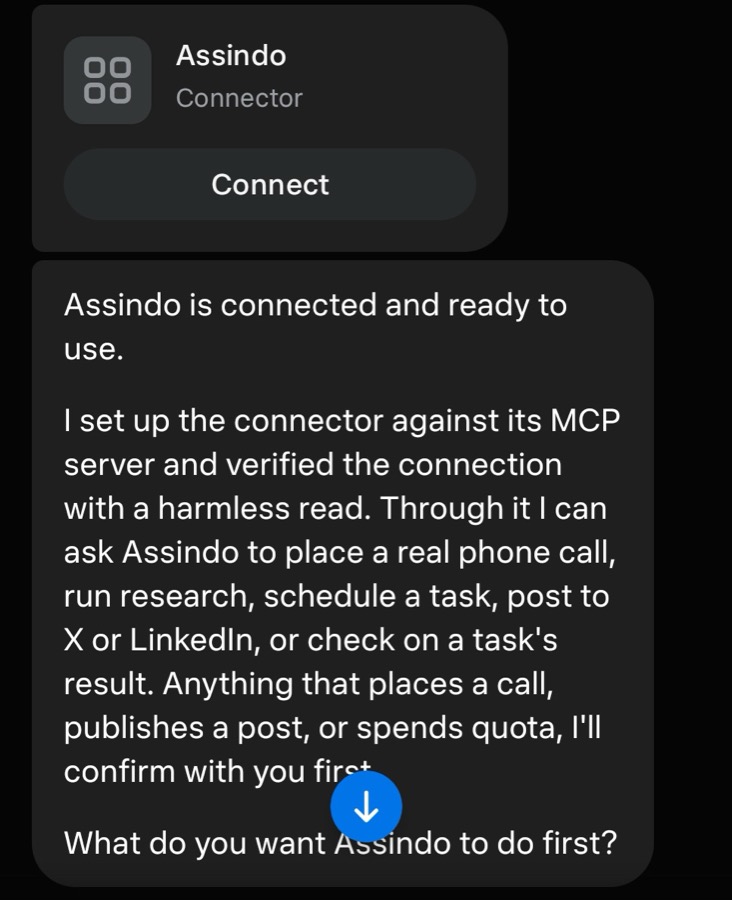
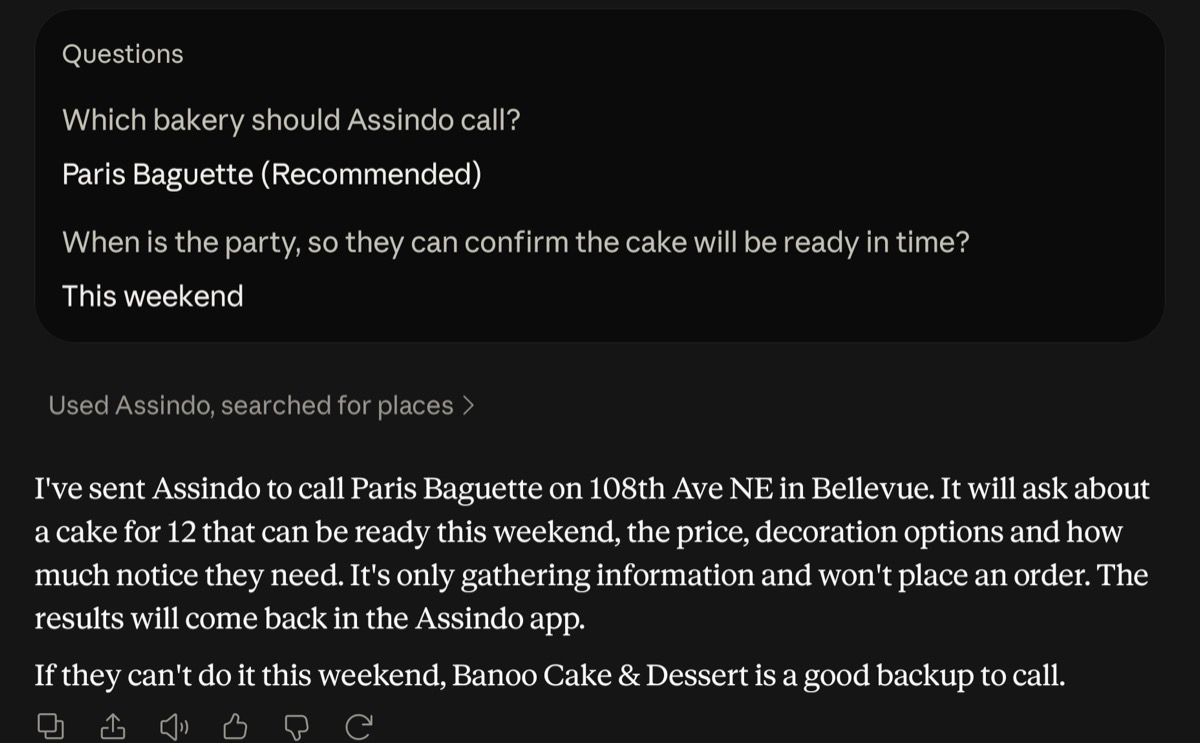
General-purpose AI phone agents. Assindo is an AI phone assistant, not a bill-specific service. You tell it which business to call and what outcome you want, and it places a real phone call, navigates the IVR, waits on hold, talks to the representative and reports back with what it learned. Because it is not limited to a list of supported providers, it works for the bills that negotiation services usually skip: the local hospital's billing office, the dentist, the regional utility, the HVAC company that sent an invoice you did not expect. If the representative asks something only you can answer, the agent can come back to you mid-task instead of guessing.
Chat assistants without calling. ChatGPT, Claude and Gemini are genuinely useful for preparing: drafting a hardship letter, explaining a confusing medical bill, or role-playing the call. Most still cannot dial a hospital billing office for you, so the call remains yours unless you use an agent that makes calls. We compared which assistants can place calls today in Can AI make phone calls for you?
How to Brief an AI Agent to Negotiate a Payment Plan
The quality of the result depends on the brief. This template works for most payment plan calls:
Call [Company] billing at [phone number] about account [number],
in the name of [account holder].
Goal: find out what payment plan or hardship options exist
for a balance of [amount].
Ask about: financial assistance or charity care, interest-free
payment plans, the longest plan term, any prompt-pay discount,
and whether an itemized bill is available.
I can afford about [amount] per month.
Do NOT agree to any plan, payment or settlement. Bring me the
options, the representative's name and a reference number.
If they need me to verify identity, tell me what they need.
Four details do most of the work:
1. A monthly number, not a total. Billing teams think in monthly payments. Giving the agent your realistic monthly amount anchors the conversation around what you can actually pay. 2. An explicit "do not agree" line. The agent's job on the first call is to gather options. You decide which one to take, and you can call back or send the agent again to accept it. 3. A reference number and a name. This is your proof the conversation happened and what was offered. 4. The verification fallback. Many billing offices will not discuss an account in detail with anyone but the account holder. The agent should report that cleanly rather than push.
Real-World Scenarios
The ER bill. Maria has a $3,200 emergency room bill from a nonprofit hospital. She asks her AI agent to call billing, ask about the financial assistance policy and a payment plan. The agent comes back with the application link for charity care, a 24-month interest-free plan option, and a note that the hospital pauses collection activity while an application is pending. Maria applies first and decides on the plan only if needed.
The winter heating bill. James's gas bill doubled after a cold snap. His AI assistant calls the utility to ask about budget billing and a payment arrangement for the past-due amount, and gets the name of the state assistance program the utility works with. James enrolls in budget billing himself through the online account, now that he knows it exists.
The surprise contractor invoice. A small business owner receives a $1,800 repair invoice due in 15 days. The agent calls the contractor's office and asks whether the invoice can be split into three payments. The office agrees in principle and asks for a written request, which the owner sends that afternoon.
The collector call. Before anyone agrees to pay a collector, the agent's job is narrow: confirm who the collector represents, request the validation information in writing, and ask what plan options exist once the debt is verified. If a collector keeps calling you, an AI call screener can also take those calls and summarize them, so you are not ambushed into an agreement on the spot. Our guide on AI call screening explains how screening works.
Where You Still Need to Be Involved
Being honest about the limits will save you frustration:
- Identity verification. Expect billing offices to ask for date of birth, the last digits of an SSN or a PIN before discussing details. Decide in advance what you are comfortable sharing through any service, and when in doubt, do the verification step yourself.
- Agreeing and paying. Accepting a plan and setting up the payment method should stay with you. It is your money and your signature.
- Getting it in writing. Ask for the arrangement by email or letter. A phone agreement is easy to dispute later; a written one is not.
- Legal and debt advice. For large debts, lawsuits or wage garnishment, talk to a nonprofit credit counselor or a lawyer. An AI agent is a calling tool, not legal representation.
The Bottom Line
Can AI negotiate a payment plan for you? It can do the part that keeps most bills on the kitchen counter: making the call, getting through the menu, waiting on hold, asking the right questions and writing down the answers. Creditors already put AI on their side of the line. Using an AI agent on your side simply evens out the conversation.
Start with the online options, know which bills have built-in flexibility (hospital assistance policies, utility arrangements, card hardship programs), and keep the final yes for yourself. If the billing office only answers the phone, let an AI assistant make that first call. If you are deciding what else to hand off, our guide on what to delegate to an AI agent is a good next step, and never waiting on hold again covers the hold queue itself.
Stop Putting Off the Billing Call
Assindo calls the billing office, waits on hold and asks about your payment options, then reports back so you decide what to accept.